
The Unseen Roadmap: Why Route Surveys Are Critical for Cargo Risk Assessment
In the complex world of logistics, moving standard containers is often a matter of "plug and play." You book a truck, load the box, and trust the highway infrastructure to handle the rest. But when the cargo shifts from standard pallets to Over-Dimensional Cargo (ODC)—such as industrial turbines, heavy machinery, or aerospace components—the rules of the road change entirely.
For these high-stakes movements, a standard GPS is useless. Google Maps might tell you a road is open, but it won't tell you that a bridge clearance is six inches too low for your trailer, or that a sharp turn in a rural village is geometrically impossible for a multi-axle vehicle.
This is where the Route Survey becomes the most valuable tool in a logistics manager's arsenal. It is the bridge between theoretical planning and physical reality, serving as the foundation of effective Cargo Risk Assessment.
What is a Route Survey?
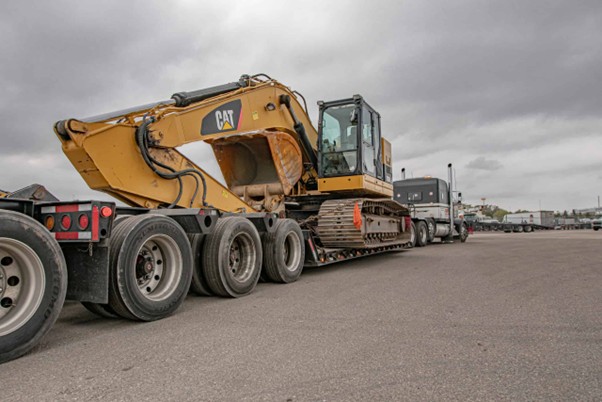
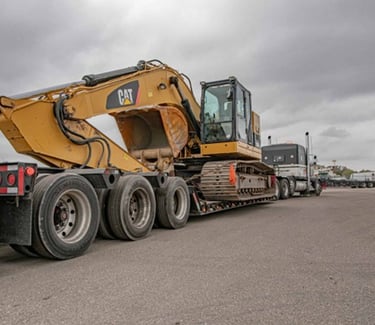
A route survey is a comprehensive, physical inspection of the proposed path of transport conducted before the cargo ever leaves the factory floor. It involves a team of surveyors driving the exact route, measuring clearances, analyzing road conditions, and identifying potential bottlenecks.
While a transport plan tells you where you are going, a route survey tells you how you will get there—or if you can get there at all.
The survey team doesn't rely on outdated municipal records or digital mapping data. They physically drive the route with measuring equipment, recording every obstacle, every tight turn, every overhead structure. This hands-on approach captures the reality that exists today—not the theoretical conditions from five years ago when the road was last surveyed by municipal authorities.
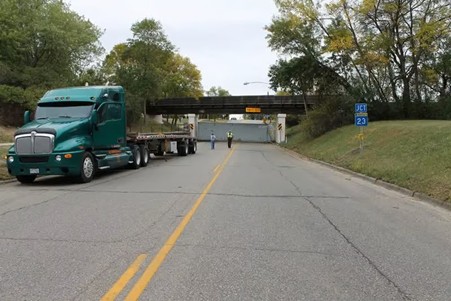
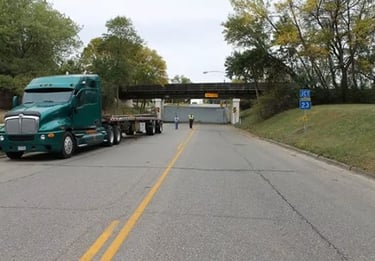
Above: Physical measurement of bridge clearances is essential, as posted signs are often inaccurate due to road resurfacing
The Hidden Costs of Skipping a Survey
Consider the financial implications: A specialized heavy-haul trailer can cost upward of INR 50,000 per day to hire. If that trailer reaches a point where it cannot proceed—a bridge too low, a turn too tight, a road too weak—the entire operation must reverse. This doesn't just mean turning around; it means:
Demobilization costs: Unloading the cargo at an unplanned location
Storage fees: Securing the equipment while alternative routes are explored
Remobilization costs: Loading onto different equipment or reconfiguring the transport
Time penalties: Missing project deadlines, delaying construction schedules
Reputation damage: Loss of client confidence and future business
A route survey, which might cost INR 50000-150000, suddenly becomes extraordinarily cost-effective insurance.
The Pillars of Risk Assessment
When insurers and project managers assess risk, they are looking for variables that could cause damage, delay, or financial loss. A route survey neutralizes these variables by converting "unknowns" into managed data points.
1. Vertical and Horizontal Clearances
The most immediate risk to ODC is physical impact. A route survey meticulously catalogs every overhead structure—bridges, flyovers, signboards, and gantries. Crucially, surveyors do not rely on posted signs, which are often inaccurate due to road resurfacing. They measure the actual ground-to-ceiling clearance using laser measurement devices and traditional surveying equipment.
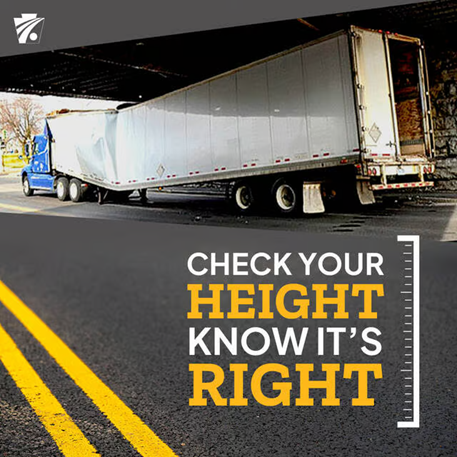

Consider this real-world example: A bridge might be marked as having 15 feet of clearance. However, after years of asphalt overlay maintenance, the actual clearance may now be 14 feet 6 inches. For a load that stands 14 feet 8 inches tall, this discrepancy means the difference between a successful transit and a catastrophic bridge strike—which can result in structural damage costing millions, criminal charges, and indefinite road closures.
Similarly, horizontal pinch points are identified with equal precision. A toll plaza might be wide enough for a car, but too narrow for a specialized trailer. Identifying these bottlenecks allows the team to plan for the removal of bollards or the use of specific "ODC lanes" at toll gates. In some cases, entire toll plaza sections must be temporarily reconfigured, requiring coordination with highway authorities weeks in advance.
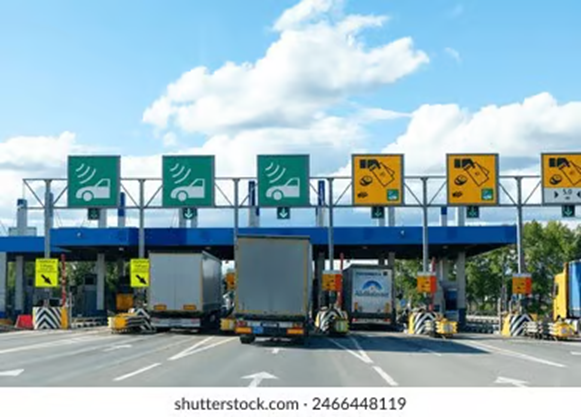
Above: Toll plazas and narrow passages present horizontal clearance challenges for oversized loads
2. The Invisible Threat: Overhead Utilities
One of the most frequent causes of cargo damage and transit delay is low-hanging electrical wires. High-tension cables often sag due to heat or age, dropping below the statutory safety height. During summer months, thermal expansion can cause wires to drop an additional 12-18 inches from their winter position.
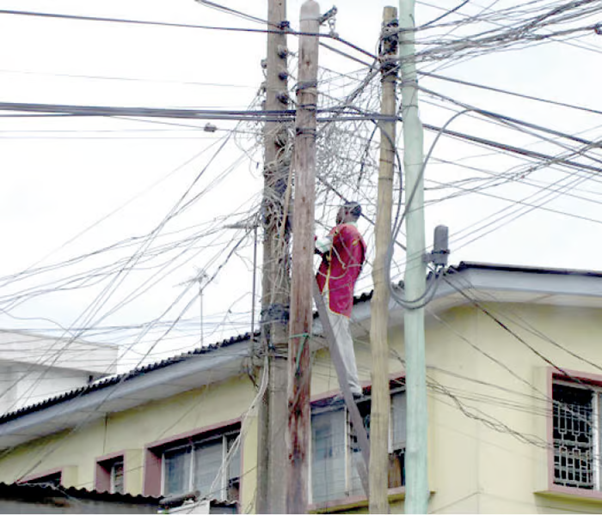
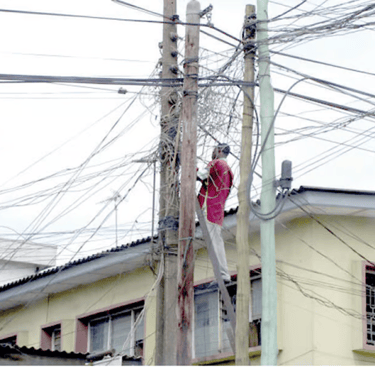
A route survey identifies these "hot spots." By flagging low wires, the risk assessment team can mandate the use of insulated wooden battens (tools used to safely lift wires over the cargo) or coordinate with local power authorities for a temporary power shutdown during the transit window.
The cost of temporarily de-energizing a power line is negligible compared to the alternative: a wire strike can cause widespread power outages affecting thousands of customers, potential electrocution hazards, equipment damage, and liability claims that can exceed millions of dollars.
3. Road Geometry and Load Bearing
Can the ground support the weight? A heavy haulage trailer distributes massive weight, but culverts and small bridges on secondary roads may not be rated for such loads. Some older rural bridges were designed for agricultural traffic of 20-30 tons; modern ODC movements can exceed 200 tons.

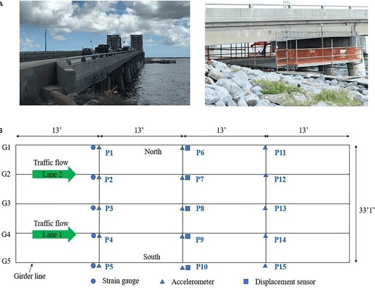
The survey assesses the structural integrity of these crossings, sometimes recommending steel plate reinforcements or bypasses. In extreme cases, structural engineers must be brought in to perform load calculations and temporary strengthening measures.
Furthermore, the "turning radius" is critical. A survey analyzes sharp corners to ensure the trailer creates a "swept path" without taking out power poles or crushing roadside structures. Modern route survey teams use specialized software that inputs the exact dimensions of the trailer combination—including the load—and creates 3D simulations of every turn along the route.
This swept path analysis reveals:
Whether the trailer can physically make the turn
If temporary removal of street furniture (signs, lights, barriers) is needed
The exact positioning strategy (e.g., swinging wide into the opposite lane)
Traffic control requirements to safely execute complex maneuvers


4. Road Surface Quality and Camber
While often overlooked, road surface condition is a critical risk factor. Potholes, uneven surfaces, and severe road camber (lateral tilt) can destabilize loads and cause shifting. For precision equipment—such as medical imaging devices, scientific instruments, or aerospace components—even minor vibrations can cause misalignment or internal damage worth millions.
The survey documents:
Pavement condition: Identifying sections requiring pre-transit repairs or ultra-slow speed restrictions
Road camber: Measuring lateral tilt that could cause top-heavy loads to shift or tip
Speed bumps and rumble strips: Locations where loads must be secured with additional restraints
Expansion joints: Bridge joints that can create sudden jolts requiring special crossing procedures
5. Environmental and Temporal Factors
A comprehensive route survey doesn't just assess static conditions—it considers how conditions change:
Seasonal variations: Routes passable in winter may be restricted in summer due to heat-induced pavement softening or wire sag
Weather vulnerabilities: Low-lying areas prone to flooding, routes exposed to high winds affecting tall loads
Time-of-day restrictions: Urban areas where movement is only feasible during nighttime hours (2 AM - 5 AM)
Construction schedules: Identifying planned roadwork that could close routes during the intended transit window
Above: Sharp turns and changing road elevations present significant tipping risks for top-heavy cargo, making route geometry analysis essential
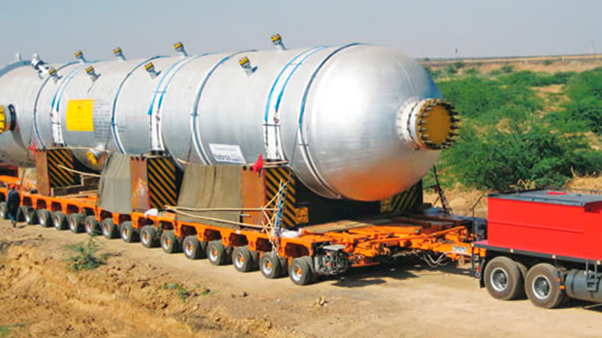
Above: Over-dimensional cargo such as industrial turbines require meticulous route planning
Drawing from route survey data, the method statement includes:
1. Detailed Transit Schedule
Departure time optimized for traffic conditions and utility coordination
Estimated time at each critical point (bridge crossings, narrow sections, turns)
Rest stops for crew changes and equipment inspections
Contingency time buffers for unexpected delays
2. Equipment Specifications
Exact trailer configuration (number of axles, load distribution)
Lashing and securing methodology with calculated restraint capacities
Specialized equipment requirements (wire-lifting frames, temporary road plates, pilot vehicles)
3. Coordination Requirements
Police escorts and traffic control schedules
Utility company shutdowns or wire-lifting coordination
Municipal permissions for temporary sign removal or traffic signal de-activation
Communication protocols between pilot vehicles, driver, and control center
4. Risk Mitigation Measures
Identified hazard points with specific operational procedures
Speed restrictions for different route segments
Emergency response procedures if equipment failure occurs en route
Weather monitoring and abort criteria
5. Personnel Requirements
Driver qualifications and briefing requirements
Number and positioning of escort vehicles
Spotter personnel at critical junctions
Communication equipment specifications
From Survey to Strategy: The Method Statement
The ultimate goal of the route survey is not just to find problems, but to engineer solutions. The data collected feeds directly into the Method Statement for the move—a comprehensive operational plan that serves as the blueprint for execution.
If the survey reveals a road with deep potholes and severe camber (tilt), the risk assessment will dictate a reduced speed limit and specific lashing requirements (such as heavy-duty chains instead of straps) to handle the increased vibration and G-forces. If a route is deemed impassable, the survey saves the client the catastrophic cost of a truck stuck halfway to its destination, forcing a return to the origin.
Components of a Method Statement

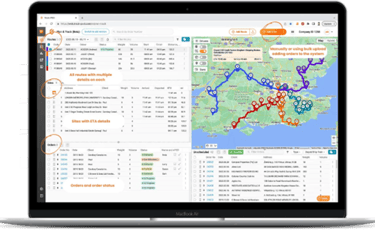
Above: Modern route planning integrates digital mapping with physical survey data
The Digital Evolution: Technology Enhancing Traditional Surveys
While physical route surveys remain irreplaceable, technology has enhanced their effectiveness:
LiDAR Scanning: Modern survey vehicles equipped with Light Detection and Ranging (LiDAR) technology can capture millions of data points, creating precise 3D models of the entire route. This data can be revisited multiple times without additional site visits.
Drone Technology: UAVs (Unmanned Aerial Vehicles) supplement ground surveys by capturing aerial perspectives of complex junctions, providing visual data for planning team meetings, and accessing locations difficult to survey from ground level.
Transport Simulation Software: Advanced programs like AutoTURN or Swept Path Analysis software allow engineers to input the exact trailer configuration and simulate the movement through every surveyed section, identifying problems before equipment is mobilized.
Real-Time Monitoring: During the actual move, GPS tracking combined with the survey database allows real-time monitoring, alerting operators if the convoy deviates from the planned route or approaches hazard points.
Regulatory and Insurance Implications
From a regulatory standpoint, many jurisdictions now mandate route surveys for ODC movements. The survey report becomes a legal document submitted with permit applications, demonstrating due diligence to road authorities.
Insurance companies increasingly require certified route surveys before providing coverage for high-value cargo. Without a survey, insurers may:
Refuse coverage entirely
Impose substantial premium increases (often 200-300% higher)
Include exclusions that void coverage if undisclosed hazards cause damage
Require the cargo owner to assume co-insurance responsibility for a significant portion of the risk
The survey report provides the evidentiary foundation that the cargo movement was planned with professional rigor. Should an incident occur despite proper planning, the survey demonstrates that reasonable precautions were taken—a critical factor in liability determination and claims settlement.
Case Studies: When Surveys Save the Day
Case Study 1: The Aerospace Component
A major aerospace manufacturer needed to transport a $45 million satellite component from their California facility to a launch site in Florida. The route survey identified 37 overhead structures requiring measurement. Three bridges were found to have insufficient clearance—discovered only because the survey team physically measured them rather than relying on posted heights.
By identifying these obstacles six weeks before the planned move, the logistics team rerouted through alternative highways, avoiding what would have been a catastrophic impact. The survey cost $28,000; the potential loss prevented exceeded $50 million when considering equipment damage, project delays, and contractual penalties.
Case Study 2: The Power Transformer
A utility company needed to move a 180-ton transformer to a substation upgrade site. The route survey revealed that one rural bridge had been downgraded in its load rating due to deterioration discovered during a recent inspection—information not yet reflected in digital databases.
The logistics team arranged for temporary steel reinforcement plates, coordinated with the local municipality, and scheduled the movement during a specific 4-hour window when traffic could be diverted. The project succeeded without incident. Without the survey, the bridge would likely have been damaged, potentially causing its closure for months and creating massive economic disruption to the region it served.
Best Practices for Route Survey Execution
For organizations planning ODC movements, implementing these best practices ensures survey effectiveness:
1. Early Engagement: Conduct surveys 4-8 weeks before the planned move, allowing time to address discovered issues.
2. Qualified Surveyors: Use certified professionals with heavy-haul experience, not general transportation consultants.
3. Comprehensive Documentation: Ensure the survey includes photographs, measurements, GPS coordinates, and written descriptions of every potential hazard.
4. Stakeholder Review: Have the survey reviewed by all parties—transport company, cargo owner, insurer—before finalizing the method statement.
5. Pre-Move Inspection: Conduct a final verification drive 72 hours before movement to confirm no changes have occurred (new construction, utility work, etc.).
6. Post-Move Debrief: After successful completion, review actual performance against the survey predictions to improve future planning.
Conclusion: The Indispensable Foundation
In the logistics of high-value equipment, there is no room for improvisation. A route survey is not merely an operational expense; it is an investment in safety and due diligence. By identifying hazards before the engine starts, logistics providers protect the cargo, the infrastructure, and their own reputation.
The survey transforms the abstract challenge of moving oversized cargo into a manageable, documented process with known variables and engineered solutions. It converts uncertainty into calculated risk, and hope into confidence.
In the end, the most dangerous mile of the journey is the one you didn't inspect. The unseen roadmap—revealed through comprehensive route surveys—is what separates professional heavy-haul operations from costly disasters. Every measurement taken, every hazard documented, and every solution engineered represents not just operational thoroughness, but a commitment to excellence that defines industry leaders.
The question is never whether an organization can afford to conduct a route survey. The real question is: can they afford not to?